
DACH Access Sprint
30-day working sprintA structured sprint for companies that do not just need a one-off signal, but a stronger, more credible DACH starting point.
When diagnosis alone is no longer enough
After initial diagnostics, many companies know where friction sits — but still struggle to translate insight into focused, coherent action.
Typical challenges at this stage are unclear priorities, scattered initiatives, or uncertainty about what should change first — and what should be left untouched.
What the engagement includes
- NDA
- Home Market Success Factors…2h co-creation with feedback
- DACH Revenue Goals…1h with feedback
- Why Canvas for authentic messaging…1h with feedback
- DACH Revenue Risk Diagnostic
- DACH Pitch Resonance Check
- 2 individual sparring calls of 1 hour each
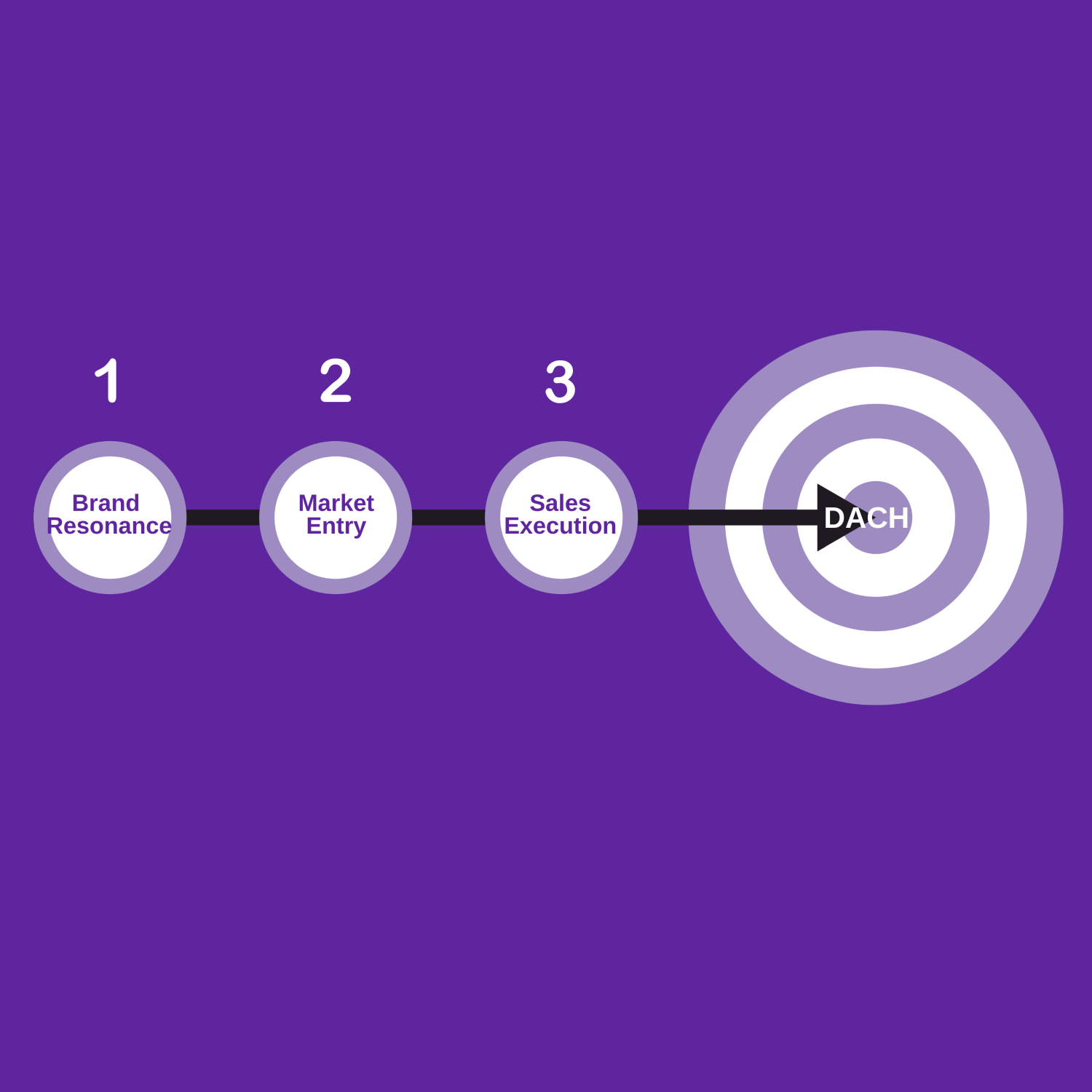
What the Access Sprint enables
Sharper messaging
Your offer, message and proof align better with DACH buyer expectations.
Clear priorities
You know where to invest and why.
Lower trust risk
Decisions and actions are grounded in buyer reality, not assumptions.
Buyer-aligned first sales approach
Effort shifts from scattered activity to targeted action.
Is the DACH Access Sprint the right step?
This is the right place to start if:
- you already see that DACH matters strategicall
- you want more than a self-assessment or a single-session revie
- you need sharper priorities before scaling activit
- you want to reduce trust risks before they compoun
- you want a stronger bridge between home-market strengths and DACH buyer reality
Not ideal if you:
- are still only testing the market
- expect a fixed, predefined program
- want long‑term support without interim decision points
How the sprint works
Step 1 – Scope & focus definition
Based on your current situation, we define what the sprint should address — and what it will not.
Step 2 – Structured work phase
Bridge2Sales works through key aspects such as message clarity, proof logic, prioritization and execution focus.
Step 3 – Synthesis & direction
Insights are integrated into a coherent view that supports confident next decisions.
Step 4 – Decision point
You decide whether to stop, adjust internally, or move into deeper engagement.